Bridging the gap between Gap Inc. associates and their data
Associates were stitching answers together across a dozen disconnected systems
Getting a straight answer inside Gap Inc., whether it was a product spec, a brand guideline, a sales trend, or the steps to file a ticket, usually meant hopping between legacy intranet tools, spreadsheets, and whoever happened to remember the process. There was no single place built to actually help someone get their job done.
Our goal: an in-house, agentic assistant that actually knows Gap Inc.
Rather than layer another generic chatbot on top of the mess, we set out to design and ship a custom, proprietary Gen AI tool, built on Gap Inc.'s own data and internal tools, that could augment the daily responsibilities of associates across every brand, from Gap to Banana Republic to Athleta to Old Navy, and help standardize practices that today live in laborious legacy software.
Role & impact
Led UX and visual design in close partnership with AI/ML engineering, data, and product teams
Ran discovery interviews and usability sessions with associates across merchandising, marketing, and store operations
Designed the conversational IA (prompts, tools, and agent switching) and built hi-fi prototypes to test each flow
Partnered with engineering to turn Gap Inc. systems and datasets into callable tools and agents
Delivered UI specifications for chat, tool, and agent components as GapGPT moved toward wider rollout
The goals
These came directly out of conversations with stakeholders across Gap Inc., and shaped every decision that followed.
Build a custom, proprietary Gen AI tool for every associate
One home base, purpose-built to augment the responsibilities associates already had, not a generic assistant bolted on top of the business.
Ground it in Gap Inc.'s own data
Custom tools and agents built on real brand and business data, so answers reflect how Gap Inc. actually operates, not generic web knowledge.
Standardize practices and sidestep legacy software
Give teams a faster, more consistent way to do recurring tasks that today live in laborious, aging internal systems.
Ship something associates would actually trust
Every response needed to make it obvious what data or tool it drew from, so people could verify before acting on it.
An in-house Gen AI tool built for Gap Inc. associates
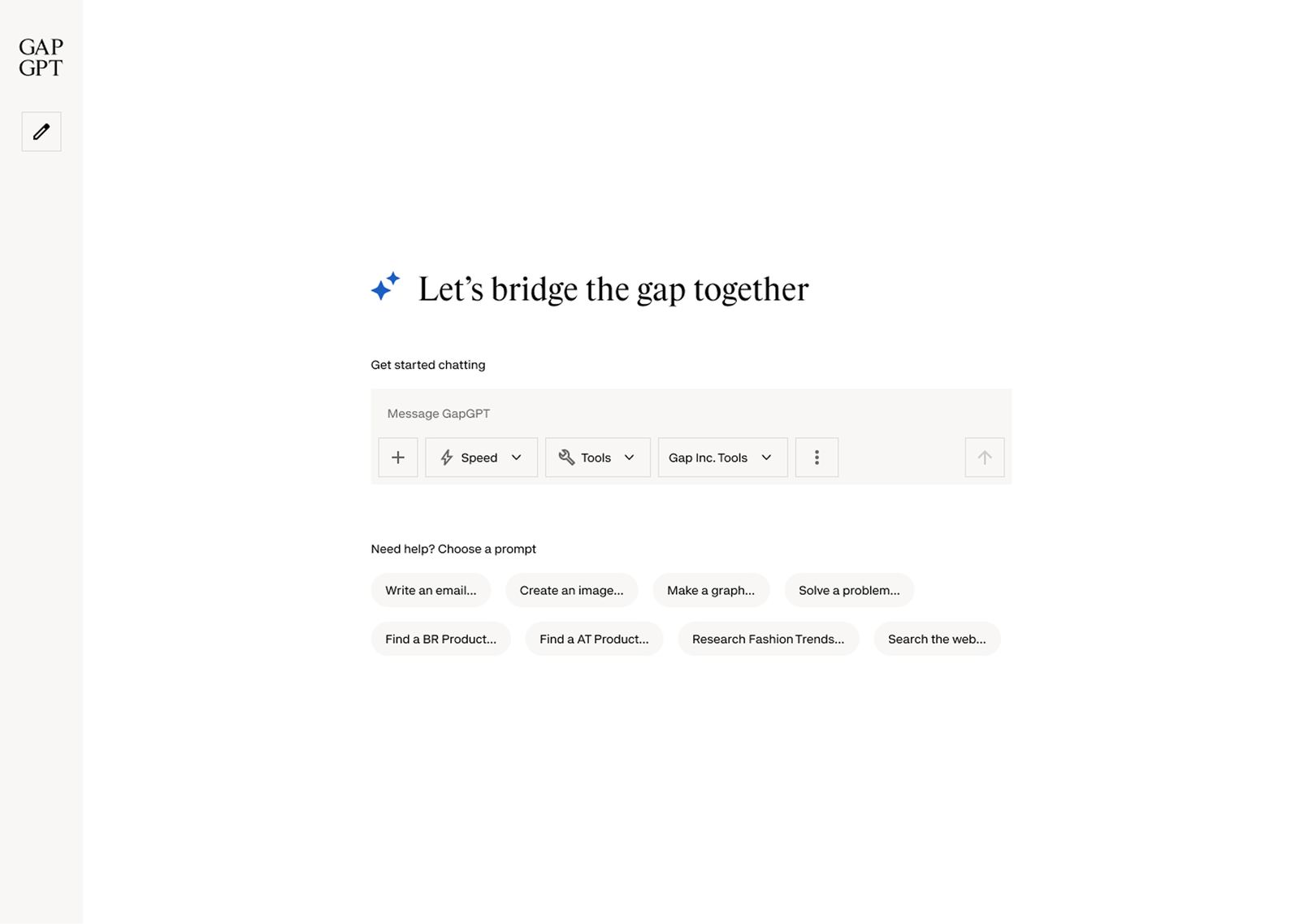
At its core, GapGPT is a chat interface associates already know how to use, but every entry point is tuned to what people actually need to get done that day: drafting a comms email, building a quick graph from internal numbers, researching a fashion trend, or finding a product across Gap Inc.'s brands.
The empty state doubles as onboarding. A row of prompt starters (write an email, create an image, make a graph, solve a problem, find a Banana Republic product, find an Athleta product, research fashion trends, search the web) shows associates what's actually possible before they've typed a word.
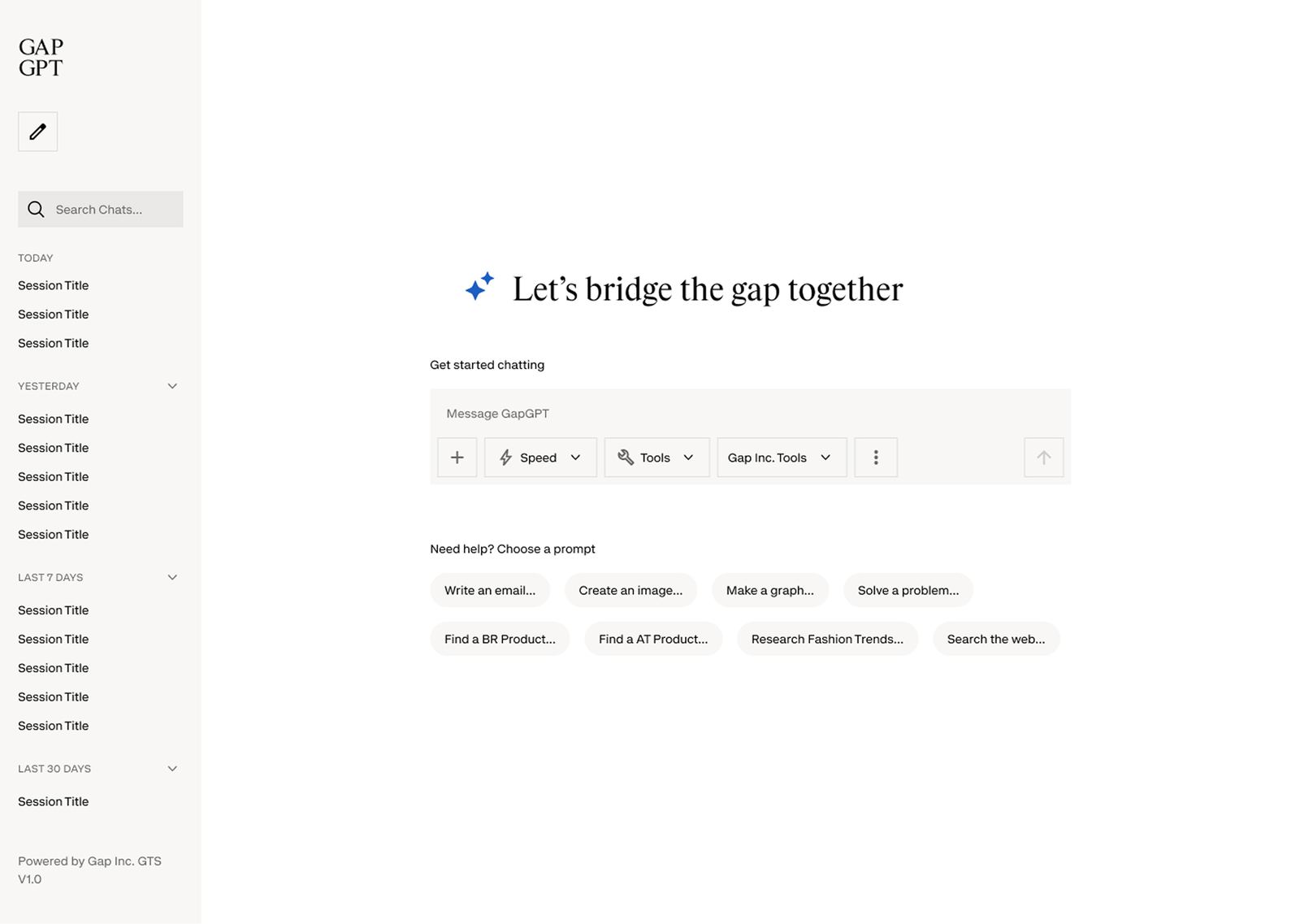
Once associates start using GapGPT regularly, sessions are organized by recency in a persistent sidebar (Today, Yesterday, Previous 7 Days, Previous 30 Days), so a conversation from last week is just as easy to pick back up as one from this morning.
Custom agents built using Gap Inc. data
A general-purpose model is only useful up to a point: the real value came from grounding it in Gap Inc.'s own data. We designed a set of custom agents, each scoped to a brand or a domain (Product Copy Writer, AT Product Expert, BR Product Expert, Fashion Trend Explorer), that associates can pull into any conversation.
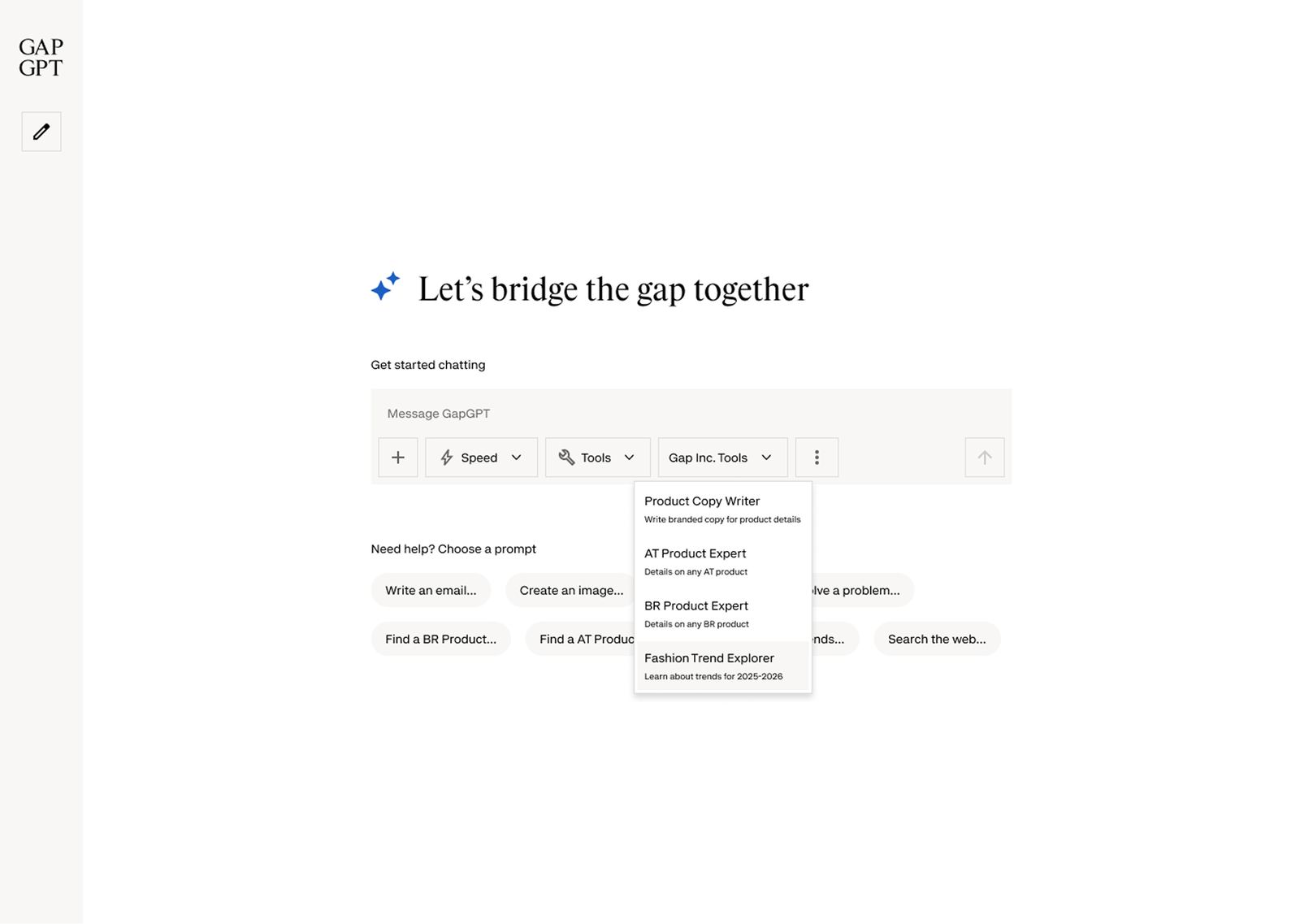
Opening the Tools menu surfaces the available agents. Each one is described in a single line, so associates know exactly what data or brand it's grounded in before they select it.
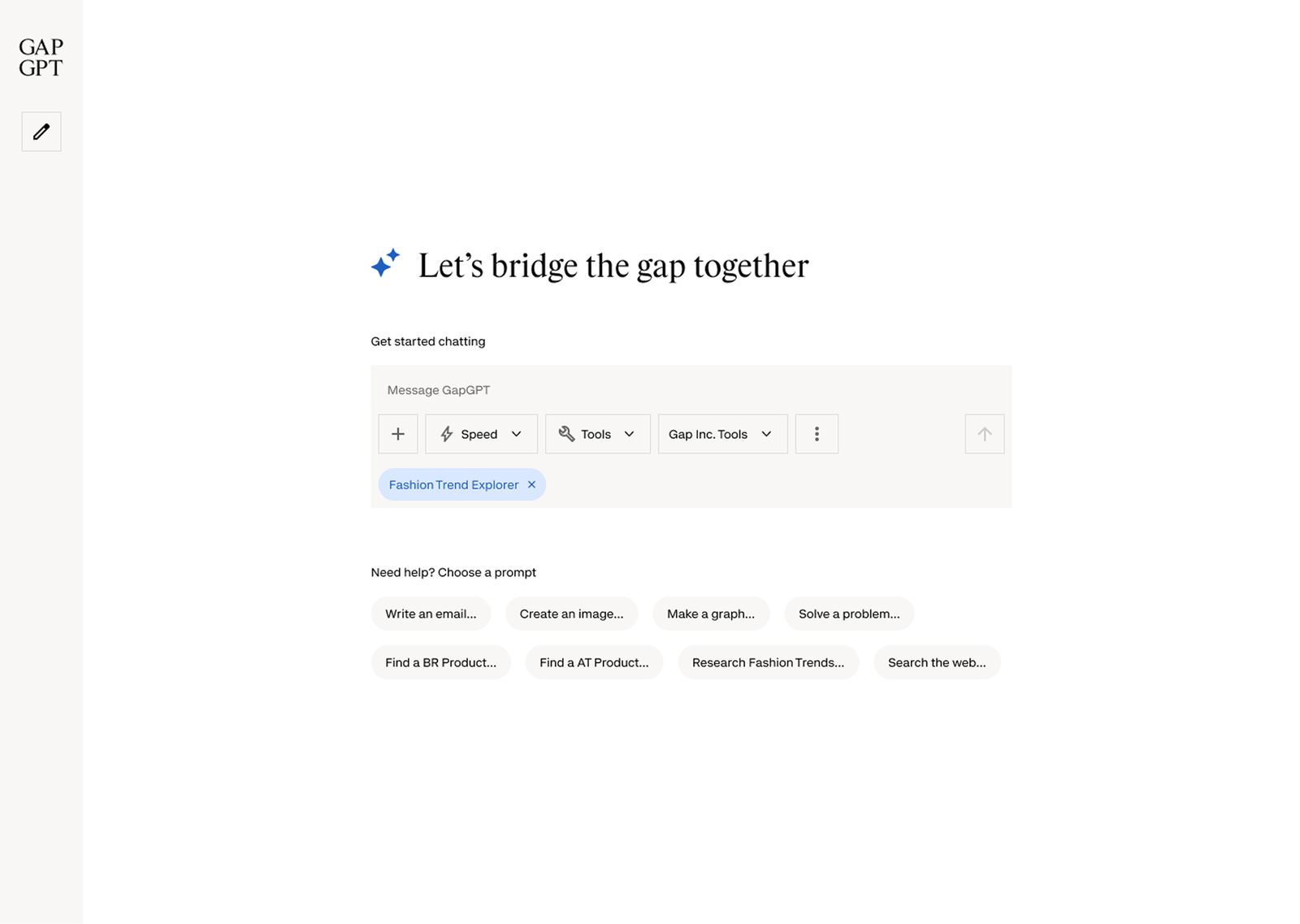
The active agent stays visible as a chip above the message box: a small but important trust signal. Associates always know which persona and dataset they're talking to, and can clear it in one tap to go back to the general assistant.
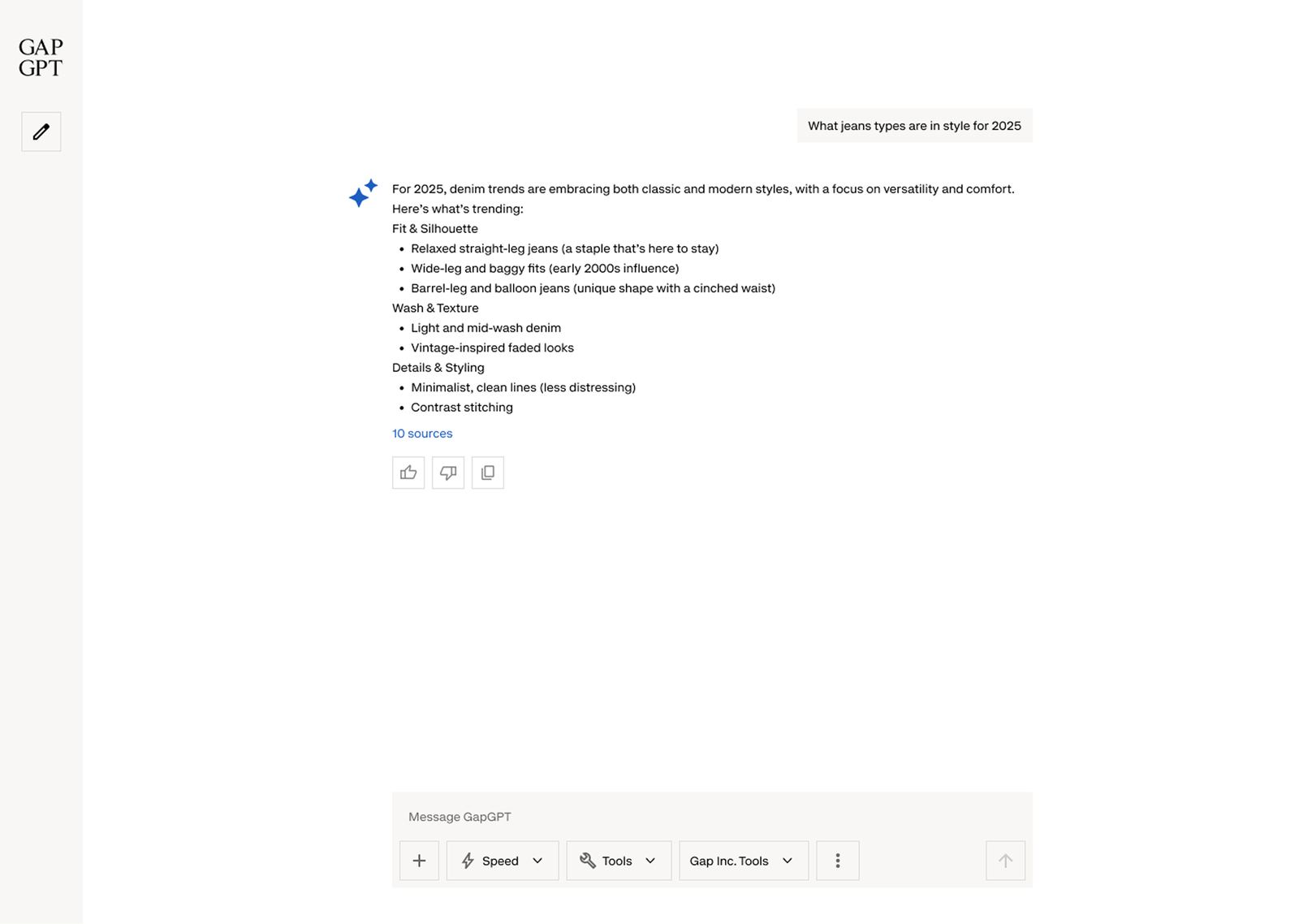
Responses from a custom agent come back structured and sourced: this one breaks a 2025 denim trend question into fit, wash, and styling notes, cites 10 sources, and offers quick actions to rate, copy, or keep exploring.
Feature scoping & prioritization
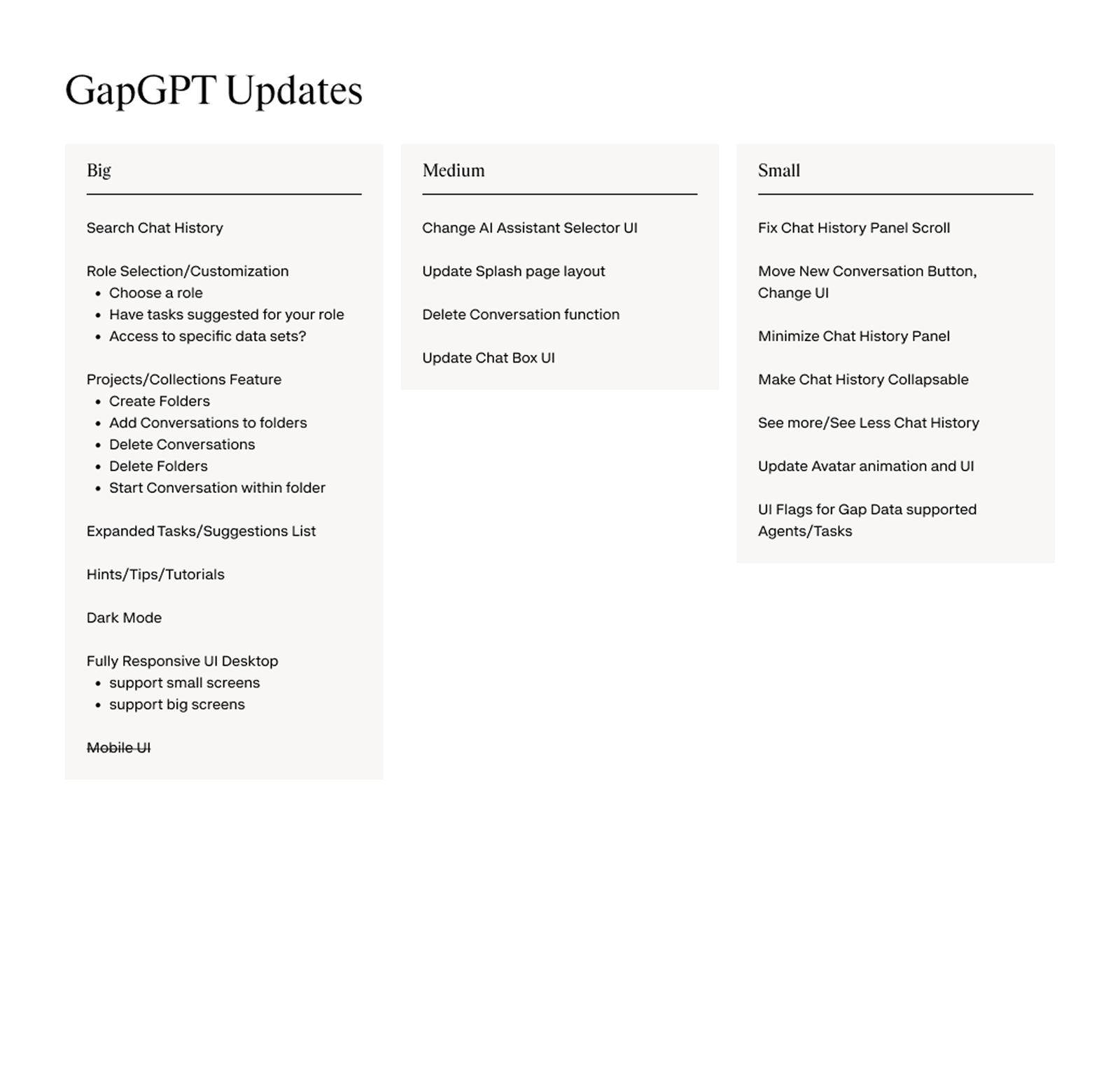
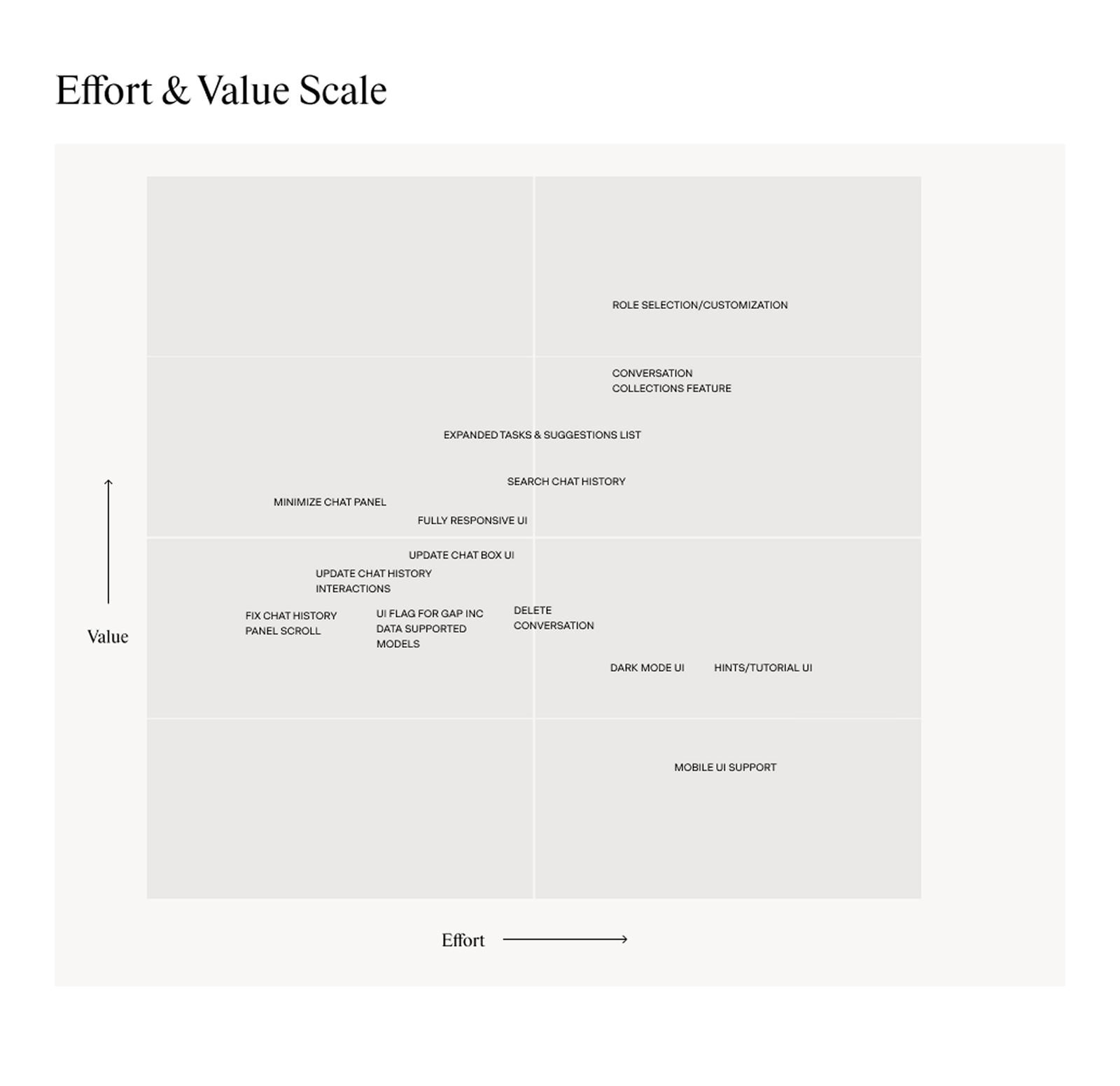
Once word got around, requests poured in from every brand and department. To keep the roadmap honest, we logged every proposed update against an effort/value framework and worked through prioritization together with stakeholders each sprint.
Explorations & iterations
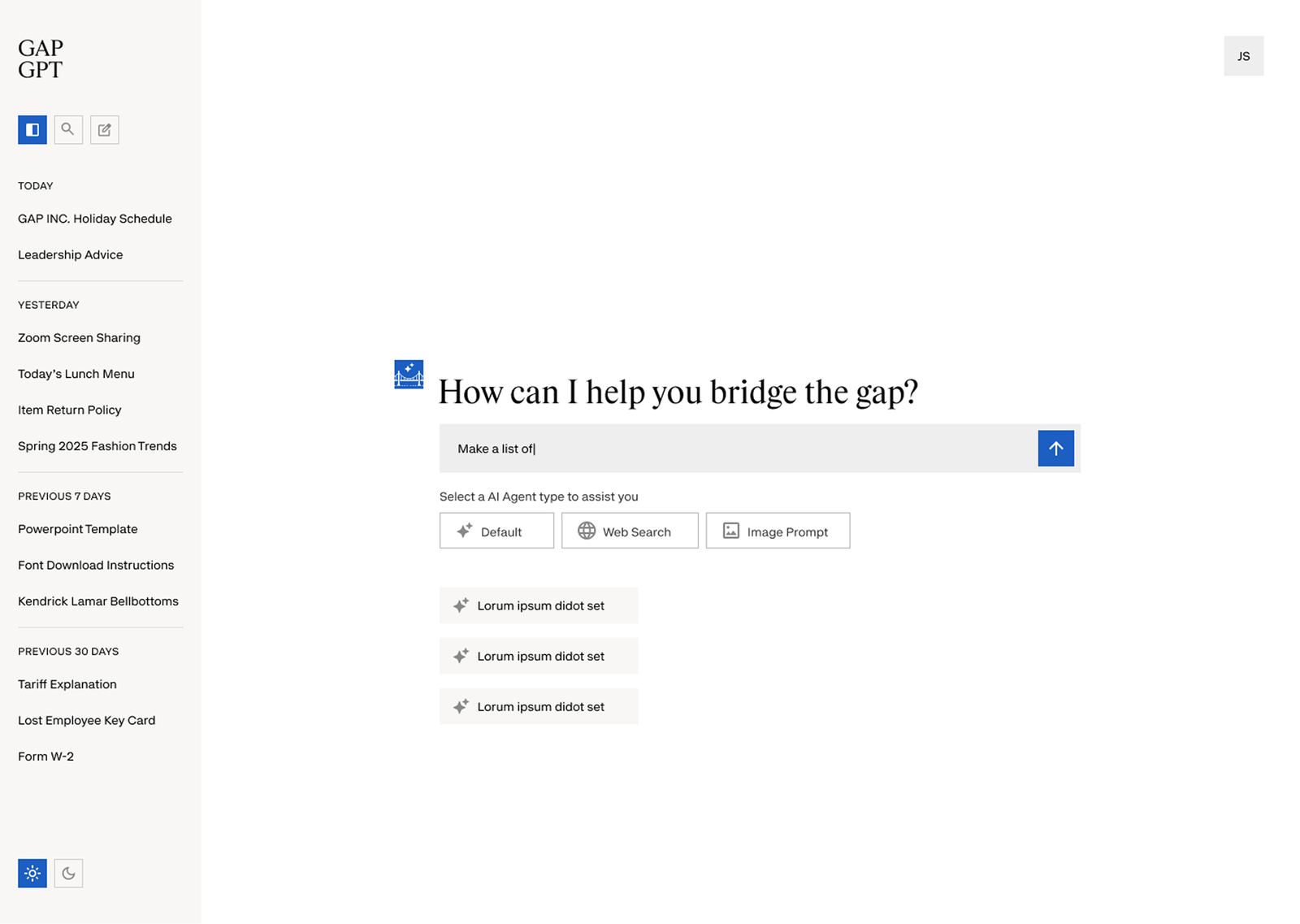
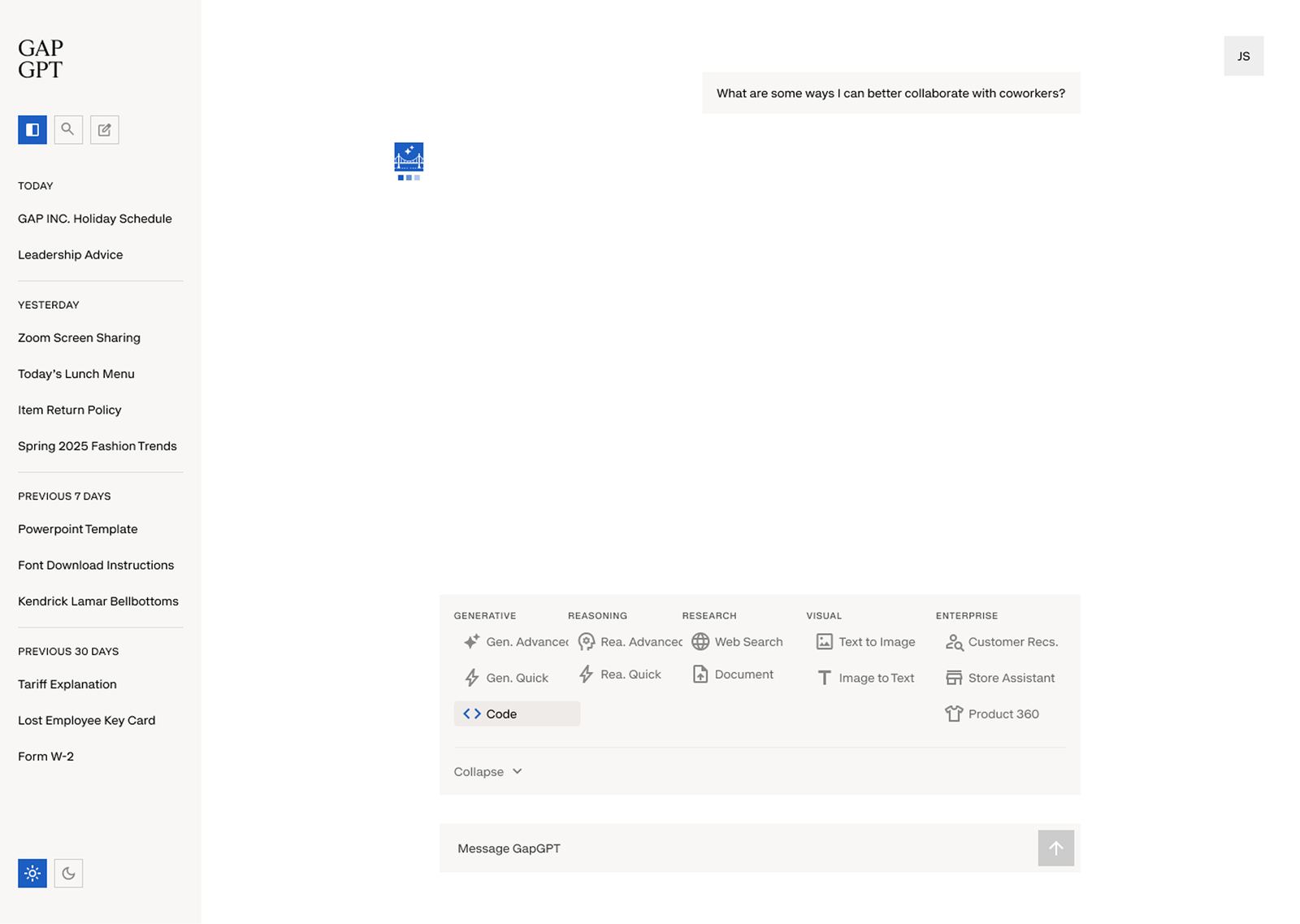
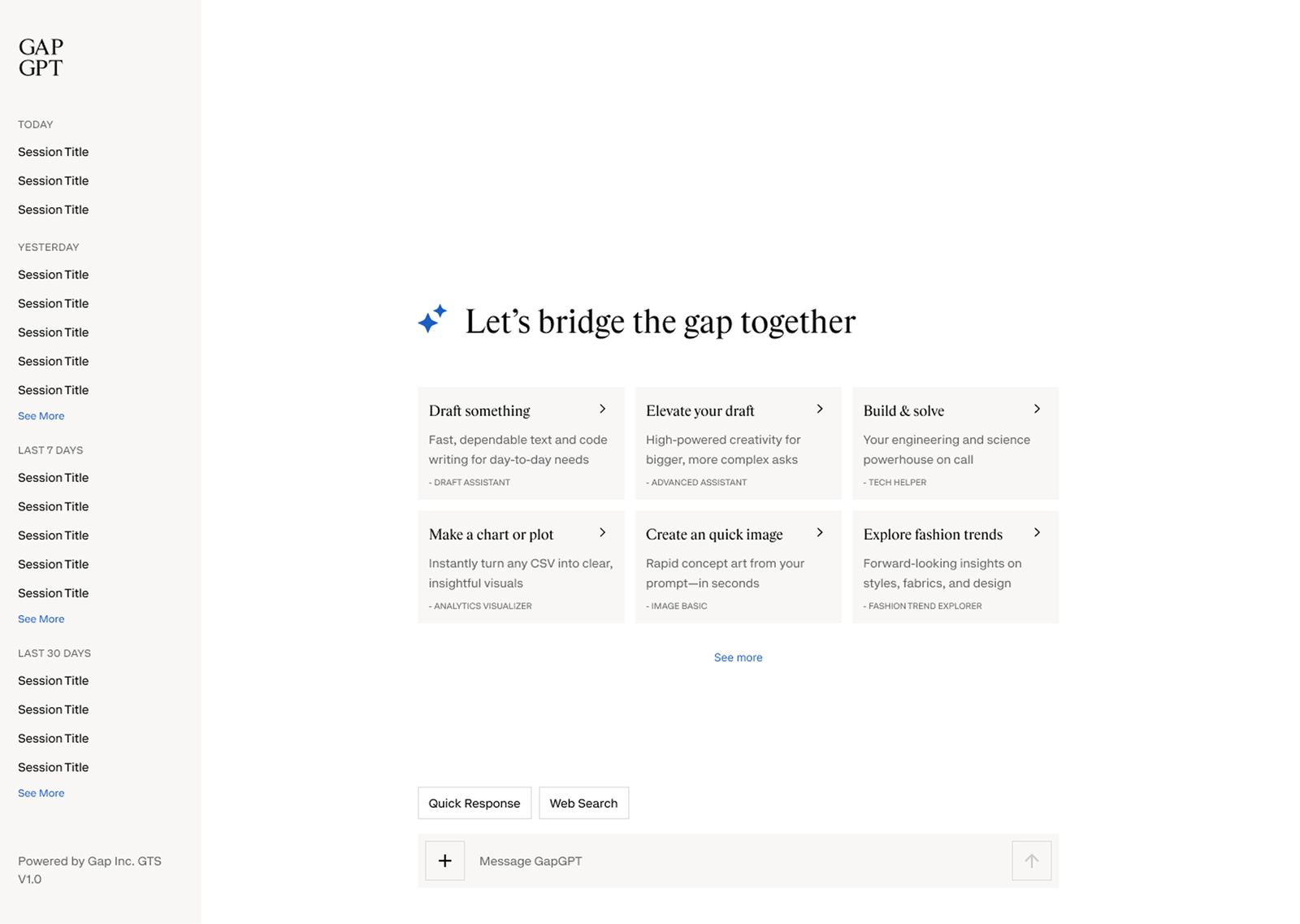
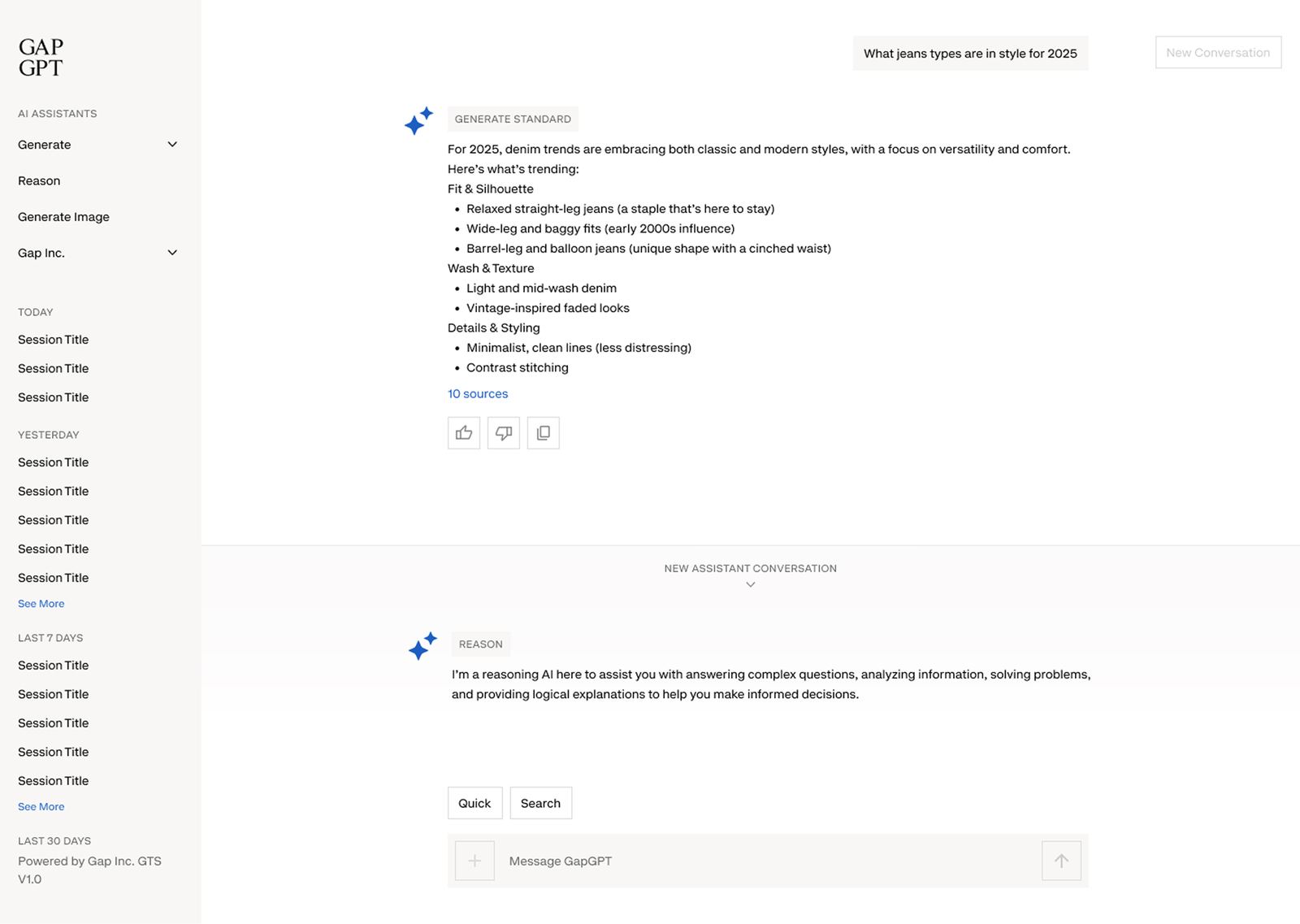
Early on, we tried a handful of different directions for the empty state, prompt suggestions, and sidebar before settling on the version that shipped. Click any image to enlarge.
Final words
GapGPT started as a way to cut through Gap Inc.'s legacy tooling, and it grew into something closer to a shared workspace — a place where someone in merchandising and someone in marketing could both get grounded, on-brand answers without learning a dozen different systems. The agent model turned out to be the real unlock: instead of one assistant trying to know everything, we could keep adding narrow, trustworthy experts and let people choose the right one for the task in front of them.